
Erwin Van Den Berg – Paddock Roundup – March 2026
March 25, 2026Katamatite, VIC
March 2026
After a long and cool spring we finally got into summer around the end of December. It’s probably one of the coolest ones we have had, with a downright cold week at Christmas time, and it has made for incredibly good-quality pasture. Not too often do we see our longest days coupled with cooler weather in Northern Victoria (basically European conditions which is where rye grass originates from).
At the start of December, we sped our grazing rotation up by a third, as we traditionally do. Rye grass tries to run to head, increases in fibre content, and drops off in protein and energy.
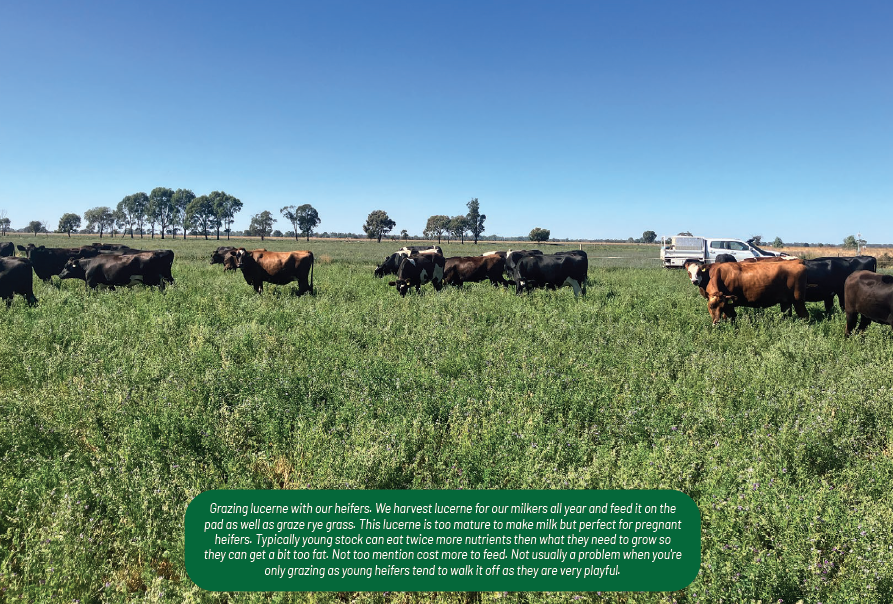
We tried for a number of weeks to continue to graze at 42-day intervals, as we did through winter and spring. We keep cover on paddocks longer that way and use less irrigation water and grow significantly more root mass. It also means there is less chance of stewing (boiling) pasture in severe heat during irrigation.
However, in the end we had to stop at 30 days, as the high fibre content meant the cows could not eat enough and consequently started to lose milk production. Only half to a third of their total diet comes from grazing pasture, depending on the time of the year, but it has a huge impact on their total diet as every bit of feed influences the intake and production outcome.
January got very hot, very quick. We had eight days of over 40°C straight in February. We never had any normal warm to hot periods through summer as we normally do, it was either cool, or downright hot. We tried to manage our irrigation carefully with the hot stints, as we didn’t want water stewing pastures or lucerne. Once temperatures get over 35°C we have a bigger chance of stewing. It meant that pastures got dry at times, which cost a bit of growth, but they came through it pretty well.
Pink eye
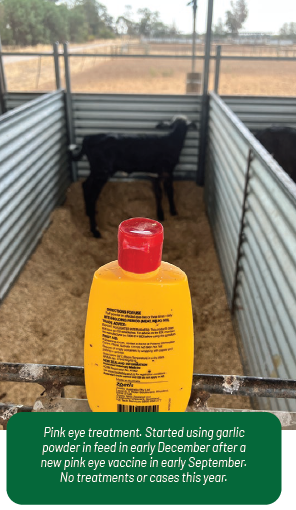
In the last 3-4 years we have had terrible cases of pink eye in our young calves of up to 160kg live weight and in the milking cows but not so much in other classes of stock. Pink eye is a horribly painful illness of the eye and requires constant monitoring and treatment. It causes temporary and or permanent blindness. We have been on our farm in Katamatite since 1982 and have had more pink eye in any one week during September to June in this period than we had in total in the 40 years prior.
All our young calves had to come through the race to be checked and treated twice a week. If we did it once a week, we were too late. Our milkers got checked and treated twice a day with an ointment that worked well but needed daily treatment. You can imagine the strain on the workload; it’s not like we haven’t got our days full as is.
This is obviously showing that the babies are less able to fight off infection. As do the milkers, who run a marathon every day of their lactation – Mums get very tired when they lactate! We also had dry cows come in with pink eye and they graze. We had several cases where we had to get the vet to remove an eye or cull the poor animal.
We did find some long excellent long-acting antibiotic that we could use for calves (not allowed for cows) but it is still reactive rather than proactive. Our aim is to only use antibiotics for acute illness or infection.
After trying the commercial pink eye vaccines to no avail, we have investigated and with consulting I got eyes swabs done and the strain of infection diagnosed. It turned out to be a unique strain to my farm, and we had ACE laboratories in Bendigo build us a vaccine last year. We have vaccinated every calf since. We don’t do the cows.
Keen for more of this?
This is exactly the kind of practical, real-world insight we share inside VicNoTill. Our From the Ground Up magazine lands in your letterbox three times a year, full of paddock roundups from our board and members.
Join VicNoTill for $345 and be part of the conversation. Join Here





Stay In Touch
Keep up to date with us by following our social media